
Care and Maintenance of Electroplating Baths
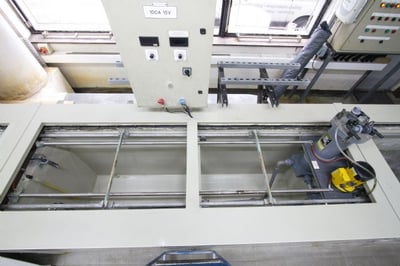
It is of great importance to keep baths in a condition of good repair and efficiency. Good maintenance of electroplating baths is done to ensure that the process is running at its optimum at all time. This prevents expensive rejects and expensive down times.
What do I need to do to maintain my solution on a daily basis?
- Check the Ph of the solution 2x daily
- Check the temperature of the solution 2x daily
- Check the specific gravity: if there is no laboratory, this will give an indication of the level of the basic chemistry o fthe solution
- Ensure the working level of the solution is maintained
What are the basic test methods?
PH tests
These are simple checks on the line by using pH papers of the correct range (3.9-5.0), this will suffice to keep the solution in check.
Small portable PH meter can be used providing that the meter is calibrated regularly with the correct buffer solutions.
*The PH meter will give a more accurate reading than the Ph paper, but the Ph does not have to be accurate to 2 decimal places.
Specific Gravity or density
This test provides a quick guide to the concentration of the metal salts and is accurate for solutions that only have one source of metal (such as chromic acid)
This test method is less reliable if the solution has several chemicals present, but it will be alarming if there is an unexplained sudden change in the S.G.
Chemical Analysis
Full chemical analysis can be carried out in house if the laboratory facilities are available. Otherwise, a sample will have to be sent to a solution supplier.
Basic analysis of the organics- when taking a sample for analysis, please ensure that the bath is at the correct working level as this will have an impact upon the results.
- Small sale plating tests: these can be carried out by the company to help evaluate the performance and behavior of the solution. -this will provide data that is not provided by other analytical methods.
- Other analytical methods may suggest that all is well with the solution when you are seeing impurities.
How do Solutions get out of control?
Cathode efficiency is less than anode efficiency
- If the anode efficiency is 100% and the cathode efficiency is 90% then the metal content of the bath will rise.
- If the cathode efficiency is 100% but the anode efficiency is less, then the metal content and density will fall.
Inorganics
- Leaking tanks and pumps can be a source of problem that goes over looked
- More water gets added as top up and the solution becomes more dilute
- It is important to check tanks and pumps for leaks from time to time
Where can contamination come from?
- Parts falling off jigs
- If using air agitation is oil getting from the air pump?
- Is the anode material of good quality?
- ALWAYS use Deionized water- using hard water for topping up lead to calcium build up
- Breakdown products from organic materials
- Pretreatment
- Pretreatment solutions not maintained correctly- leading to incomplete cleaning of the workpiece
- Pretreatment carried over into plating solutions
- Poor rinsing
- Insufficient rinsing due to low volume exchange of water
- Carry over of poor quality of rinse water into plating solution
- Drag in of rinse water entrapped in blind holes
If there is excessive contamination, total solution purification may be required
- Electrolytic
- Precipitation
- Ion exchange
- Oxidation/reduction
- Filtration
The secret of a successful operation is to add: “Little & Often”- this allows for less variation in solution parameters
- It is important to maintain records and all analytical data
- When making basic chemical additions they should be made off line and added via filtration
- Always look at the instructions supplied and container label
- Check contacts on tank for corrosion or connection sound

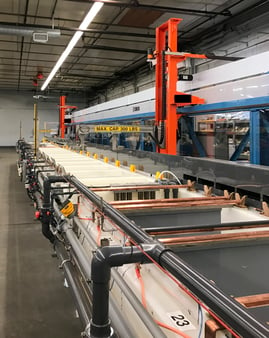

Technic 24” x Ø12” Automated, Modular, Barrel Plating Line - 28 Stations
This complete automated plating line features 28 process stations. Manufactured in 2015 and never installed or used, it offers a rare opportunity to acquire a modern, fully equipped plating system ready for worldwide deployment.
- Stock No
- BAK400
- Category
- Electroplating & treatment lines
- Model
- Technic
- Year of Manufacture
- 2015
- Work Envelope (WxDxH mm) [?]
- 24” x Ø12” Barrels (610mm x Ø300mm )
- Process Stages
- 28 Process Stations
- Other Info
- Allen-Bradley PLC/HMI
- Condition
- Brand New, Unused, Current Model
- Location
- Connecticut, USA

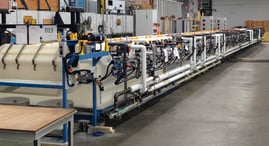
Technic 48" x Ø18" Automated, Modular, Barrel Plating Line - 35 Stations
Unused and never installed, this Technic automated plating system, offers 35 process stations and capacity for up to 10 loads per hour. Complete with three servo-controlled hoists, Allen-Bradley PLC/HMI, 18 plating barrels, rectifiers, filtration, drying and fume extraction.
- Stock No
- BAK500
- Category
- Electroplating & treatment lines
- Model
- Technic
- Year of Manufacture
- 2015
- Work Envelope (WxDxH mm) [?]
- 48" x Ø18" Barrels (1220mm x 460mmØ)
- Process Stages
- 35 Process Stations
- Other Info
- Allen-Bradley PLC/HMI
- Condition
- Brand New, Unused, Current Model
- Location
- Connecticut, USA
- Price [?]
- Please call on +44 (0) 1922 45 8000
- Part of a Direct Site Clearance
- Unused Modular Barrel Plating Lines
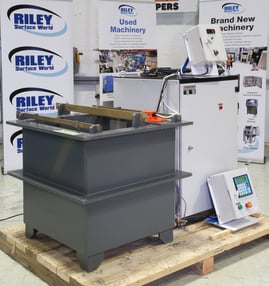
GTech Electroplating Systems Electrolytic Plating Station
This GTech electroplating station is a robust, self contained plating tank designed for reliable electrolytic processing. Manufactured from 15mm thick PVC, the single compartment tank offers a nominal 273 litre capacity, with integral support feet raising the unit clear of the floor for a practical and durable installation.
- Stock No
- TF380
- Category
- Electroplating & treatment lines
- Model
- GTech Electroplating Systems
- Year of Manufacture
- 2020
- Work Envelope (WxDxH mm) [?]
- 700 x 650 x 700 (TBC)
- Process Stages
- Single Plating + Single/Double Rinse
- Condition
- Seen working by RSW, Excellent Condition, Current Model
- Refurbished Price [?]
- £ Login or Register for price.
- Sold As Seen Price [?]
- £ Login or Register for price.
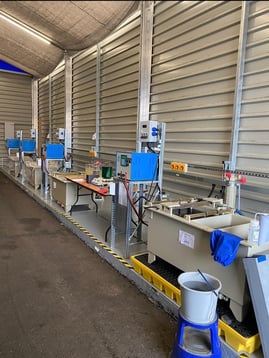
GTech Electroplating Systems Electrolytic Plating Station
This GTech electroplating station is a robust, self contained plating tank designed for reliable electrolytic processing. Manufactured from 15mm thick PVC, the single compartment tank offers a nominal 273 litre capacity, with integral support feet raising the unit clear of the floor for a practical and durable installation.
- Stock No
- TF381
- Category
- Electroplating & treatment lines
- Model
- GTech Electroplating Systems
- Year of Manufacture
- 2020
- Work Envelope (WxDxH mm) [?]
- 700 x 650 x 700 (TBC)
- Process Stages
- Single Plating + Single/Double Rinse
- Condition
- Seen working by RSW, Excellent Condition, Current Model
- Refurbished Price [?]
- £ Login or Register for price.
- Sold As Seen Price [?]
- £ Login or Register for price.
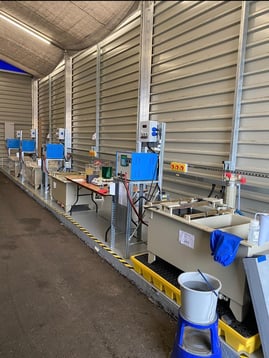
GTech Electroplating Systems Electrolytic Plating Station
This GTech electroplating station is a robust, self contained plating tank designed for reliable electrolytic processing. Manufactured from 15mm thick PVC, the single compartment tank offers a nominal 273 litre capacity, with integral support feet raising the unit clear of the floor for a practical and durable installation.
- Stock No
- TF382
- Category
- Electroplating & treatment lines
- Model
- GTech Electroplating Systems
- Year of Manufacture
- 2020
- Work Envelope (WxDxH mm) [?]
- 700 x 650 x 700 (TBC)
- Process Stages
- Single Plating + Single/Double Rinse
- Condition
- Seen working by RSW, Excellent Condition, Current Model
- Refurbished Price [?]
- £ Login or Register for price.
- Sold As Seen Price [?]
- £ Login or Register for price.
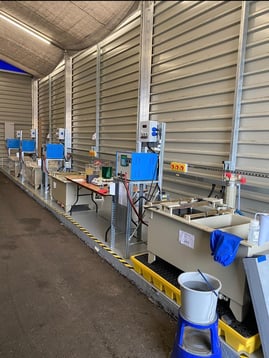
GTech Electroplating Systems Electrolytic Plating Station
This GTech electroplating station is a robust, self contained plating tank designed for reliable electrolytic processing. Manufactured from 15mm thick PVC, the single compartment tank offers a nominal 273 litre capacity, with integral support feet raising the unit clear of the floor for a practical and durable installation.
- Stock No
- TF383
- Category
- Electroplating & treatment lines
- Model
- GTech Electroplating Systems
- Year of Manufacture
- 2020
- Work Envelope (WxDxH mm) [?]
- 700 x 650 x 700 (TBC)
- Process Stages
- Single Plating + Single/Double Rinse
- Condition
- Seen working by RSW, Excellent Condition, Current Model
- Refurbished Price [?]
- £ Login or Register for price.
- Sold As Seen Price [?]
- £ Login or Register for price.
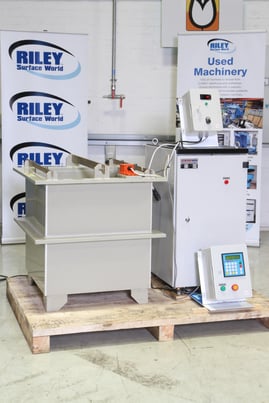
GTech Electroplating Systems Electrolytic Plating Station
This GTech electroplating station is a robust, self contained plating tank designed for reliable electrolytic processing. Manufactured from 15mm thick PVC, the single compartment tank offers a nominal 273 litre capacity, with integral support feet raising the unit clear of the floor for a practical and durable installation.
- Stock No
- TF384
- Category
- Electroplating & treatment lines
- Model
- GTech Electroplating Systems
- Year of Manufacture
- 2020
- Work Envelope (WxDxH mm) [?]
- 700 x 650 x 700 (TBC)
- Process Stages
- Single Plating + Single/Double Rinse
- Condition
- Seen working by RSW, Excellent Condition, Current Model
- Refurbished Price [?]
- £ Login or Register for price.
- Sold As Seen Price [?]
- £ Login or Register for price.
Machines & equipment for sale
- Surface Treatment
- Cleaning & Degreasing
- Polishing & Belt Linishing
- Mass Finishing
- Ovens & Furnaces
- Process Cooling
- Shot Blasting
- Dust & Fume Extraction
- Air Compressors
- Rectifiers & Transformers
- Miscellaneous
- Latest Stock
- Special Offers
- Direct From Site Clearances
- Auctions
- Brand New Machines
- Available Immediately
- Sell Your Machine
Machine Alert
Get the latest machines emailed directly to you as they become available to buy online. Sign Up Now
