
What is Acid Etching?
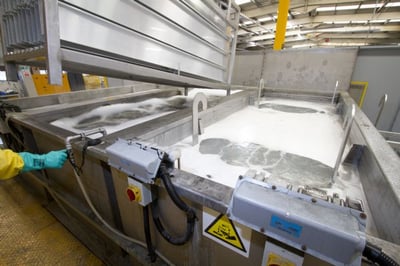
Acid etching is defined as the process of cutting a hard surface, such as a metal, by using a specially formulated acid for etching (etchant) in order to create a design onto the metal. Industrial metal etching is a manufacturing method for metals that uses acid baths to subtract material and create the desired shape. Typically, the industrial metal etching process involves five steps:
- Cleaning
- Masking
- Scribing
- Etching
- Demasking
Industrial metal etching is used in industries such as aerospace for manufacturing complex components. It is used when mechanical machining is not an option and the metal removal and finish have to be uniform.
There are two processes commonly used:
- Aluminium Etch: process by which a layer of the surface is removed, prior to penetrant inspection. Aluminium etching enhances the identification of surface defects before processing the component.
- Titanium Etching: This process is widely used in the aerospace industry. Titanium is commonly etched during the manufacturing process or prior to non-destructive testing using a variety of different acids.
The typical chemical process that are applied to etching plants are: alkaline cleaning, acid etching, chemical milling, descaling, and desmutting. The typical chemicals that are applied are: sulphuric acid, nitric, acid, hydrochloric acid, hydrofluoric acid and fluorosilicic acid. The typical components processed in etching plants are nickel-based, steel alloy, and titanium components. Typical parts include blades, fan discs, compressors, turbine discs, and other parts.
Etching provides several different benefits:
- Removes ground in impurities
- Smooth out surface imperfections such as extrusion lines and mild scratches
- Removes ground in oxide and scale
- Produces a uniform smooth surface
- Changes the natural brightness to a dull matte finish
- Low cost tooling
- Quick turnaround times
- No “heat affected zone”
For our surface finishing lines we have in stock, check out the available machines below that could be suitable for acid etching.

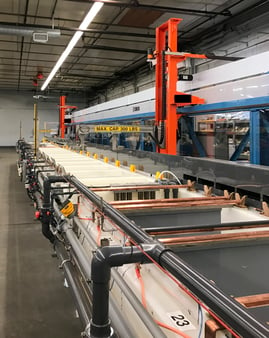

Technic 24” x Ø12” Automated, Modular, Barrel Plating Line - 28 Stations
This complete automated plating line features 28 process stations. Manufactured in 2015 and never installed or used, it offers a rare opportunity to acquire a modern, fully equipped plating system ready for worldwide deployment.
- Stock No
- BAK400
- Category
- Electroplating & treatment lines
- Model
- Technic
- Year of Manufacture
- 2015
- Work Envelope (WxDxH mm) [?]
- 24” x Ø12” Barrels (610mm x Ø300mm )
- Process Stages
- 28 Process Stations
- Other Info
- Allen-Bradley PLC/HMI
- Condition
- Brand New, Unused, Current Model
- Location
- Connecticut, USA

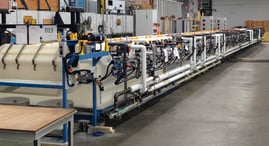
Technic 48" x Ø18" Automated, Modular, Barrel Plating Line - 35 Stations
Unused and never installed, this Technic automated plating system, offers 35 process stations and capacity for up to 10 loads per hour. Complete with three servo-controlled hoists, Allen-Bradley PLC/HMI, 18 plating barrels, rectifiers, filtration, drying and fume extraction.
- Stock No
- BAK500
- Category
- Electroplating & treatment lines
- Model
- Technic
- Year of Manufacture
- 2015
- Work Envelope (WxDxH mm) [?]
- 48" x Ø18" Barrels (1220mm x 460mmØ)
- Process Stages
- 35 Process Stations
- Other Info
- Allen-Bradley PLC/HMI
- Condition
- Brand New, Unused, Current Model
- Location
- Connecticut, USA
- Price [?]
- Please call on +44 (0) 1922 45 8000
- Part of a Direct Site Clearance
- Unused Modular Barrel Plating Lines
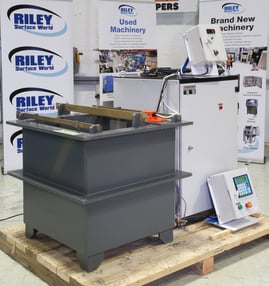
GTech Electroplating Systems Electrolytic Plating Station
This GTech electroplating station is a robust, self contained plating tank designed for reliable electrolytic processing. Manufactured from 15mm thick PVC, the single compartment tank offers a nominal 273 litre capacity, with integral support feet raising the unit clear of the floor for a practical and durable installation.
- Stock No
- TF380
- Category
- Electroplating & treatment lines
- Model
- GTech Electroplating Systems
- Year of Manufacture
- 2020
- Work Envelope (WxDxH mm) [?]
- 700 x 650 x 700 (TBC)
- Process Stages
- Single Plating + Single/Double Rinse
- Condition
- Seen working by RSW, Excellent Condition, Current Model
- Refurbished Price [?]
- £ Login or Register for price.
- Sold As Seen Price [?]
- £ Login or Register for price.
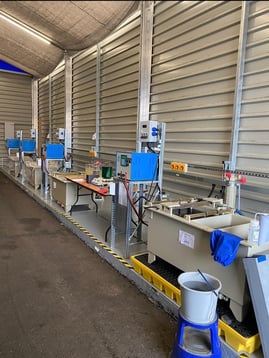
GTech Electroplating Systems Electrolytic Plating Station
This GTech electroplating station is a robust, self contained plating tank designed for reliable electrolytic processing. Manufactured from 15mm thick PVC, the single compartment tank offers a nominal 273 litre capacity, with integral support feet raising the unit clear of the floor for a practical and durable installation.
- Stock No
- TF381
- Category
- Electroplating & treatment lines
- Model
- GTech Electroplating Systems
- Year of Manufacture
- 2020
- Work Envelope (WxDxH mm) [?]
- 700 x 650 x 700 (TBC)
- Process Stages
- Single Plating + Single/Double Rinse
- Condition
- Seen working by RSW, Excellent Condition, Current Model
- Refurbished Price [?]
- £ Login or Register for price.
- Sold As Seen Price [?]
- £ Login or Register for price.
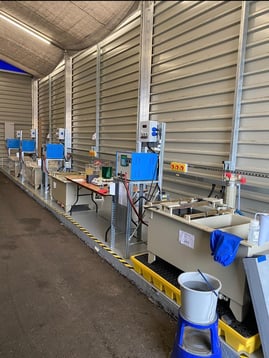
GTech Electroplating Systems Electrolytic Plating Station
This GTech electroplating station is a robust, self contained plating tank designed for reliable electrolytic processing. Manufactured from 15mm thick PVC, the single compartment tank offers a nominal 273 litre capacity, with integral support feet raising the unit clear of the floor for a practical and durable installation.
- Stock No
- TF382
- Category
- Electroplating & treatment lines
- Model
- GTech Electroplating Systems
- Year of Manufacture
- 2020
- Work Envelope (WxDxH mm) [?]
- 700 x 650 x 700 (TBC)
- Process Stages
- Single Plating + Single/Double Rinse
- Condition
- Seen working by RSW, Excellent Condition, Current Model
- Refurbished Price [?]
- £ Login or Register for price.
- Sold As Seen Price [?]
- £ Login or Register for price.
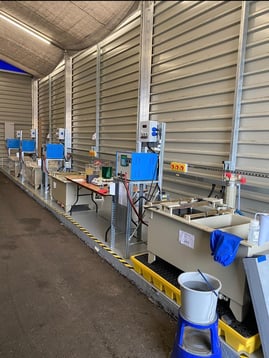
GTech Electroplating Systems Electrolytic Plating Station
This GTech electroplating station is a robust, self contained plating tank designed for reliable electrolytic processing. Manufactured from 15mm thick PVC, the single compartment tank offers a nominal 273 litre capacity, with integral support feet raising the unit clear of the floor for a practical and durable installation.
- Stock No
- TF383
- Category
- Electroplating & treatment lines
- Model
- GTech Electroplating Systems
- Year of Manufacture
- 2020
- Work Envelope (WxDxH mm) [?]
- 700 x 650 x 700 (TBC)
- Process Stages
- Single Plating + Single/Double Rinse
- Condition
- Seen working by RSW, Excellent Condition, Current Model
- Refurbished Price [?]
- £ Login or Register for price.
- Sold As Seen Price [?]
- £ Login or Register for price.
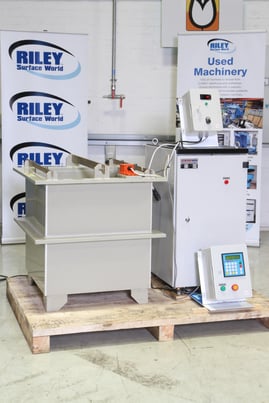
GTech Electroplating Systems Electrolytic Plating Station
This GTech electroplating station is a robust, self contained plating tank designed for reliable electrolytic processing. Manufactured from 15mm thick PVC, the single compartment tank offers a nominal 273 litre capacity, with integral support feet raising the unit clear of the floor for a practical and durable installation.
- Stock No
- TF384
- Category
- Electroplating & treatment lines
- Model
- GTech Electroplating Systems
- Year of Manufacture
- 2020
- Work Envelope (WxDxH mm) [?]
- 700 x 650 x 700 (TBC)
- Process Stages
- Single Plating + Single/Double Rinse
- Condition
- Seen working by RSW, Excellent Condition, Current Model
- Refurbished Price [?]
- £ Login or Register for price.
- Sold As Seen Price [?]
- £ Login or Register for price.
Machines & equipment for sale
- Surface Treatment
- Cleaning & Degreasing
- Polishing & Belt Linishing
- Mass Finishing
- Ovens & Furnaces
- Process Cooling
- Shot Blasting
- Dust & Fume Extraction
- Air Compressors
- Rectifiers & Transformers
- Miscellaneous
- Latest Stock
- Special Offers
- Direct From Site Clearances
- Auctions
- Brand New Machines
- Available Immediately
- Sell Your Machine
Machine Alert
Get the latest machines emailed directly to you as they become available to buy online. Sign Up Now
