

Latham 6" Ram Pump Sidebar Filter Press
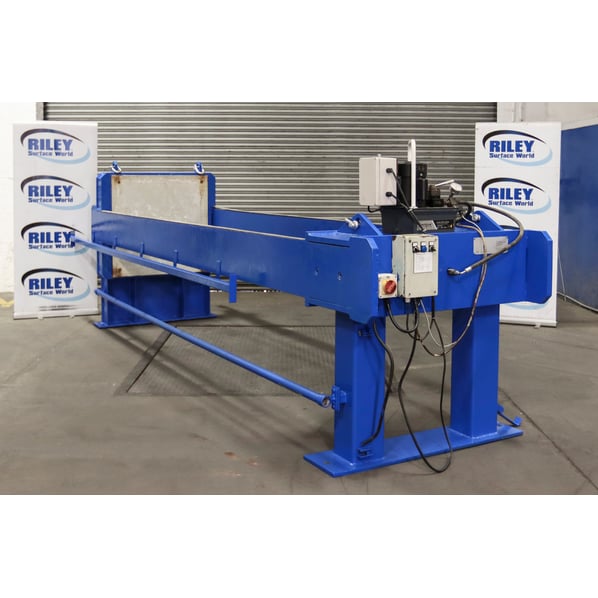


- Stock No
- TF371
- Manufacturer
- Latham
- Model
- 1000 Sidebar Semi-Mechanical
- Year of Manufacture
- 2000
- Serial
- C1304
- Condition
- From a working environment, Good Condition
- Work Envelope (WxDxH mm) [?]
- 1000 x 1000 x 25mm x 55 Chambers
- Process Stages
- 3 Stage, Closing, Opening, Discharging
- Other Info
- Recon` Recip` Sludge Pump in 2022 @ £15k
- Location
- Our Central Warehouse, Aldridge, UK
- Weight (kgs)
- 3500
- External Dimensions (WxDxH mm) [?]
- 5317 x 1570 x 1840mm
- Delivery Your delivery options
Description
Latham’s 6" Filter Press delivers high efficiency solid/liquid separation with a compact, robust design built for demanding industrial sludge applications. With new filter cloths, a refurbished hydraulic pump and semi‑automatic plate shifting, it offers reliable performance and lower operating costs for metal finishing, water treatment and chemical processing environments.
Latham International Ltd are specialists operating at the forefront of today’s pressure filtration technology. Their filter presses achieve a more efficient level of solid/liquid separation than alternative methods. The success is founded on world class standards of service and know how: developing tailor made systems which drive down costs for our customers and deliver clearer filtrates from more compact, easy-to-manage cakes'
New set of Filter cloths include and re-painted condition.
Applications Include
- Metal hydroxide sludge
- Brine sludge
- Secondary biological sludge
- Water treatment alum sludge
- Oily sludge
- Food and beverage
- Chemical
- Micro Electronics
How the Filter Press Works
The filter press consists of a head and follower that contain in between a pack of vertical rectangular plates.
Each plate is dressed with filter cloth on both sides and, once pressed together, they form a series of chambers that depend on the number of plates. The entire pack of plates is supported by side or overhead beams. The head serves as a fixed end to which the feed and filtrate pipes are connected, and the follower moves along the beams and presses the plates together during the filtration cycle by a hydraulic cylinder press mechanism.
The plates have generally a centred feed port that passes through the entire length of the filter press so that all the chambers of the plate pack are connected together. Likewise, four corner ports connect all the plates and collect the mother and wash filtrates in a “closed discharge” towards outlets that are located on the same side as the feed inlet. The filter press has plates that are fitted with cocks at their lower side so that the filtrate flows in an “open discharge” to a trough so a visual inspection of the condition of the filter cloth by the clarity of the filtrate that passes through each chamber.
The side bar suspension design incorporates plates each fitted with two handles, one on each side located near their mid section, which rest on side bars. The side bars connect to fixed end plates to form a press framework; one of these end plates, the cross head or tightening head, carries the closing gear which bears on the follower plate, itself freely supported on the side bars, causing the follower plate and the plates and frames to close against the second fixed end plate, the head. The closing is provided by a hydraulically actuated ram.
The side bar suspension press can be fully mechanised and provides automatic means of closing the plates together. Sealing the press at a pre-determined pressure, moving each plate individually to afford cake discharge. Controlling the movement to minimise filter cloth wear due to impact and providing a safety system whereby electric power is cut off if an operator approaches the filter while the plate transfer mechanism or the closing mechanism is in operation.
Hydraulic Reciprocating Ram Pump (Refurbished 2022)
The hydraulic reciprocating ram sludge/slurry pump is built to off shore specifications and is of a hardwearing design featuring a chrome piston rod. The hydraulic cylinder also features extensive internal guidance and support for the piston rod thereby eliminating lateral forces upon the hydraulic seals, which can promote oil leaks. The top of the hydraulic cylinder features internal, hydraulic cushioning to facilitate absolute control over the sludge ram at the top of the stroke where the ram changes direction from up to down. This contributes to the quite operation of the pump.
This pump is literally the beating heart of the filter press and operates under the most demanding of conditions. The unit is responsible for the transfer of dense sludges or slurries into the filter press plate assemblies for subsequent dewatering. A full service of this unit was completed and returned it to its optimal performance and reliability standards, ensuring a high level of reliability and capability is awarded to the machine
The control panel has the following control buttons
- Press open / close switch
- Start push button
- Press open light
- Press close light
Semi Automatic Plate Shifter
The filter cake is discharged by separating the plates around it and allowing it to fall beneath the press into some form of container. Plate separation is achieved using the semiautomatic plate shifter supplied with the press.
Roll the shifter towards the hydraulic end of the press until the jaws are between the first pair of plate handles and press the operating button. The jaws will raise into the gap between the handles and, when fully raised, will separate the plates to a distance of approximately 500mm. Releasing the operating button will allow the jaws to lower and retract.
Press Operating and Maintenance manual is included.
Hydraulic pump manual is included
 Print / Download Latham 6" Ram Pump Sidebar Filter Press Datasheet
Photographs taken prior refurbishment. Our refurbishment service is not available on all machines.
Machines & equipment for sale
- Surface Treatment
- Cleaning & Degreasing
- Polishing & Belt Linishing
- Mass Finishing
- Ovens & Furnaces
- Process Cooling
- Shot Blasting
- Dust & Fume Extraction
- Air Compressors
- Rectifiers & Transformers
- Miscellaneous
- Latest Stock
- Special Offers
- Direct From Site Clearances
- Auctions
- Brand New Machines
- Available Immediately
- Sell Your Machine
Machine Alert
Get the latest machines emailed directly to you as they become available to buy online. Sign Up Now
